What to Watch for in Architectural 3D Projects: How Should You Communicate with Clients?


In architectural design, a good conversation matters as much as a good render. Well-handled 3D project client communication sets the course of the job from the start. In 3D architectural project and design work, you need to discuss certain criteria with the client before the project begins. That way you work efficiently and protect your effort.
In this post we share our experience as someone who has been doing visualization for years. First we cover preparation before starting the job, then the payment and delivery rules. Finally, we list the risky phrases we often hear in the market.
Why does 3D project client communication matter so much?
In visualization work, most problems start in the conversation, not in the model. For example, if the request is not clear, the revisions never end. And if the payment terms are not put in writing, an argument breaks out at the final stage. So take communication as seriously as the technical side of the job.
Good communication also increases the client’s trust in you. And a client who trusts you comes back with new work. So communicating well protects both today’s project and the jobs that follow.
Do not take on work before you feel ready
Do not try to make money from 3D visualization before you feel ready. Put your training first. Take on paid work once you have finished building your skills. Otherwise you cannot fully finish the projects that come your way. Then you start looking for workarounds.
Also build yourself a quality portfolio. Nobody pays you for work you have never done before. Having your own website also builds trust.
How should client communication start on a 3D project?
In the first meeting, define the boundaries of the job together. Discuss which spaces you will deliver, with how many camera angles, and by what date. Also be sure to get the final project drawings. Without them, you build the model by guesswork and later redo it from scratch.
- Scope: Make the spaces, number of cameras and image resolution clear.
- Revisions: Say from the start that you will charge extra for excessive later revisions.
- Contract: If you are a company, put the terms in a contract and include a revisions clause.
- Records: If you work freelance, keep your email and social media messages.
These steps look small. But in 3D project client communication, they are the ones that save the most time.
Payment and delivery in 3D project client communication
A job that starts without talking about payment often ends badly. So we recommend applying the following rules on every project.
- Try to get at least half of the fee up front before starting the job.
- Do not send the final images before you receive the full fee.
- If you have to send them, send them at the lowest resolution, for example 640 × 480.
- Put your logo right in the middle of the preview images.
As for pricing, be careful with very low offers in the market. We discussed this topic in detail in our cheap 3D projects post.
Both sides need to do their research
Trust does not come from one side only. The visualization specialist should research the client, and the client should get to know the specialist. That way neither side gets surprised.
- For the specialist: Research the client and talk to people they have hired before.
- For the client: Ask the person doing your visualization for reference work.
- For the client: Find out whether the person has ever taken a deposit and abandoned the job.
3D project client communication: phrases to watch out for
In first meetings, people who will have you do the work and then not pay usually say similar things. When you hear examples like the ones below, do not start the job before putting the terms in writing.
- “No, my friend, he’s someone we know, he’ll pay.”
- “He’s an architect my brother knows, he won’t cheat us, we get paid regularly.”
- “Our contractor is solid, he’s never been known to pay late.”
- “Do this job, and we’ll work with you all the time.”
All of these phrases push payment into an uncertain future. A clear deposit and a written agreement, on the other hand, put both sides at ease.
Requests that turn into never-ending jobs
Some requests that reach visualization specialists in the market trap the job in an endless loop. These are the ones we run into most often:
- “You pick the colors, and we’ll look at it again later.” This request is open-ended and belongs to the jobs that never finish.
- “Send the renders, let’s try a few textures.” The client does not know what they want and is testing your patience.
- “You handle the design, we’ll look and change it accordingly.” Let us say it up front: this job will not be done even in three months.
In these cases, ask for the design decisions in writing in advance. In particular, settle the material and color choices before you start the model. We collected the other hidden topics in our hidden topics nobody tells you about in 3D projects post.
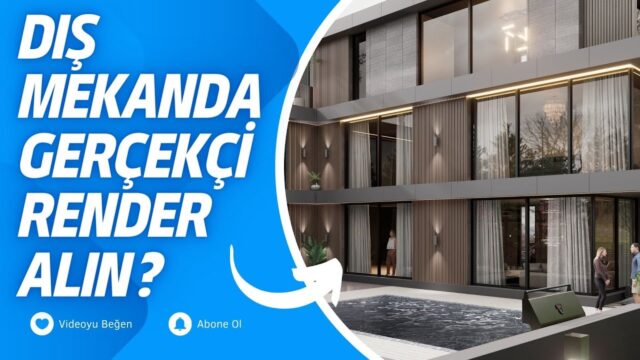
Video: how should you communicate with clients?
We covered the topic in the video with our own experience. After watching it, you can adapt the lists above to your own work.
 YouTube
Remember, learning is happiness! Set aside 10 minutes every day to improve yourself. For example, watch one of the videos on our channel. That way you get a step ahead of your competitors. Our Instagram account: https://bit.ly/3riAIkI (The video is in Turkish; this guide walks through the key steps in English.)
These two posts on the topic will also help: Architectural Project Prices and Interior Design. Our SketchUp render guide also shows you step by step where to go next.
Frequently asked questions
Will asking for a deposit scare the client away?
A serious client does not mind a deposit. On the contrary, written terms give both sides confidence.
How do I limit the number of revisions?
Write down the revision limit and the extra fee rule from the start. That way both sides know the difference between a small fix and a new job.
Is it okay to work without a contract?
If you are a company, make a contract. If you work freelance, at least keep all your correspondence.